If you've been down the Instagram and TikTok rabbit hole of HRT content, you already know how confusing it gets fast. One account tells you to start it immediately, another warns you it causes cancer, and your doctor says your labs look fine and sends you home. You're left wondering: is HRT even an option for me right now, or do I have to wait?
Let's clear this up.
What is HRT, exactly?
HRT stands for hormone replacement therapy, and at its core, it's exactly what it sounds like: replacing the hormones your body is producing less of during the menopausal transition. In most cases, that means estrogen, progesterone, or a combination of both. Sometimes testosterone is part of the conversation too.
What surprises a lot of women is how many forms it actually comes in. Depending on your symptoms, your history, and what your body needs, options can include oral tablets, including low-dose options similar to the birth control pill, transdermal patches, topical gels or creams, vaginal estrogen, and even an IUD. Each form has a different absorption route, different risk profile, and works better for different symptoms and situations.
You may have also heard the terms "bioidentical" and "synthetic" hormones floating around online. These aren't terms the medical profession formally uses anymore, but they can be helpful for understanding the landscape. Bioidentical generally refers to hormones that are chemically identical to what your body naturally produces, while synthetic refers to hormones that are similar but not an exact match. Both are prescribed, both have their place, and the right choice depends on your individual picture, not a blanket preference either way.
This is exactly why a one-size-fits-all approach doesn't work, and why in my practice and within the Perimenopause Plan, we take the time to sit down and break down every option. What are the differences between forms? What does your personal health history tell us about which is most appropriate for you? What are the real risks versus the perceived ones? We don't move forward until you fully understand what you're taking, why, and what to expect. That clarity is non-negotiable in my practice as a Naturopathic Doctor.
What does the research actually say about HRT?
Most of the big studies on HRT and long-term health, including research on breast cancer risk, cardiovascular disease, and brain health, have been conducted in postmenopausal women. This is an important distinction that often gets lost in the noise. The benefits we hear about for heart health and cognitive protection are largely tied to starting hormone therapy within 10 years of menopause, not necessarily during perimenopause itself.
That doesn't mean HRT isn't appropriate during perimenopause. It absolutely can be. But in perimenopause, the conversation shifts. We're not primarily prescribing HRT for long-term disease prevention at this stage. We're using it for one clear purpose: symptom relief. If your quality of life is being significantly impacted by hot flashes, night sweats, mood instability, or sleep disruption, HRT is a legitimate and evidence-supported option, and one I can prescribe as part of your care.
But before we go there, we need to ask better questions.
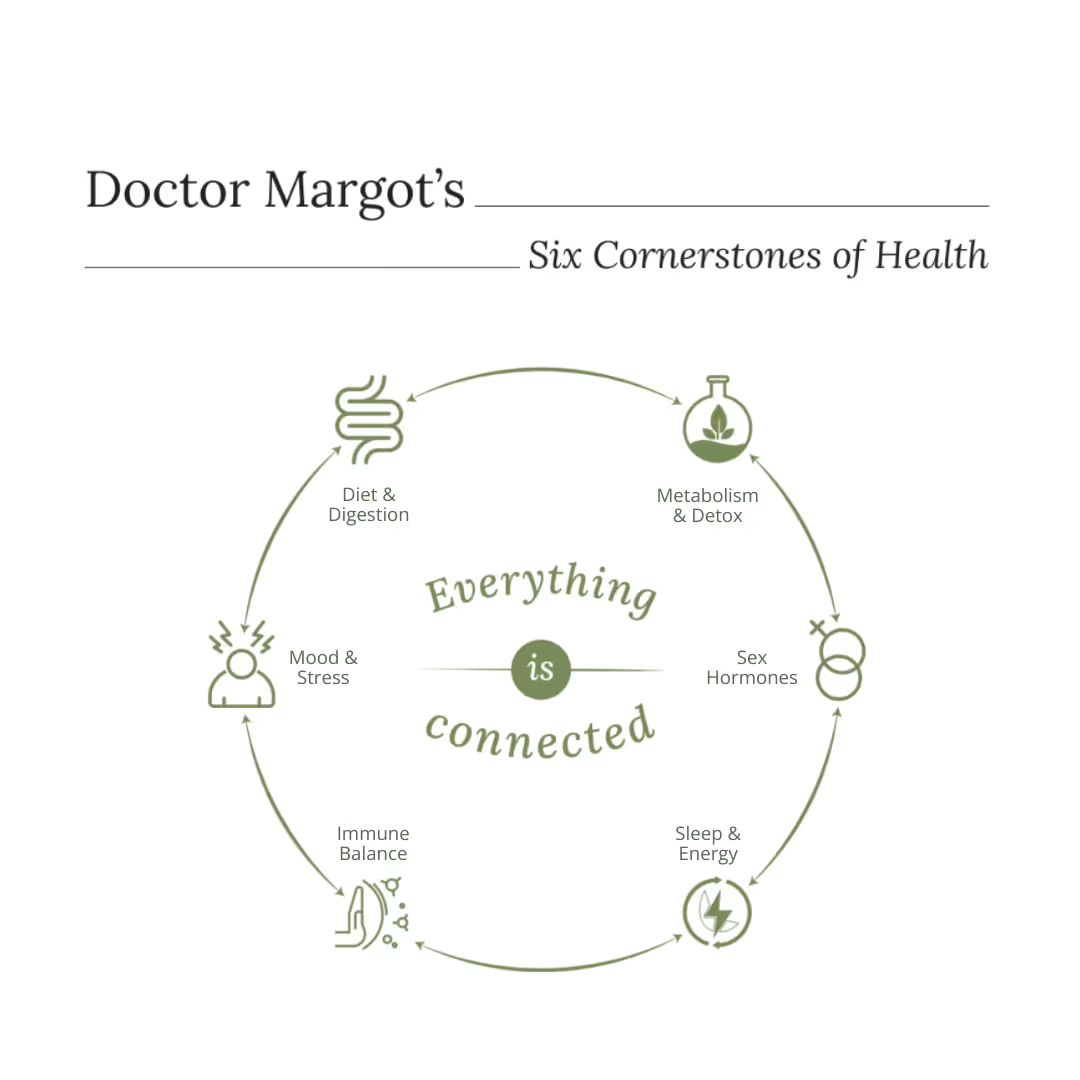
Here's where Naturopathic Medicine changes the conversation, and exactly why I created The Perimenopause Plan Program. Perimenopause symptoms are real, but they don't always have a single cause. Before defaulting to any intervention, including HRT, I want to know what else might be driving how you feel. Because some of the most common perimenopause complaints have nothing to do with estrogen and progesterone at all.
Many other hormones, like thyroid and insulin, as well as key nutrient deficiencies like vitamin D and iron, can mimic perimenopause symptoms almost exactly, which is why assessing them is a non-negotiable part of my process. I run extensive blood work, well beyond what your GP typically orders, so we can tease out what is actually driving your symptoms and build a treatment plan that addresses the real root cause, not just a best guess.
So, should you start HRT in perimenopause?
Maybe. Here's how I think about it with my patients.
If your symptoms are mild to moderate and we haven't yet explored thyroid health, blood sugar patterns, nutrient levels, and foundational lifestyle support, that's where we start. Often, addressing those pieces makes a significant difference on its own.
If your symptoms are significantly affecting your daily life, your sleep, your relationships, your ability to function, HRT is absolutely on the table and we can discuss it as part of your plan at any point. You don't have to white-knuckle your way through perimenopause waiting for menopause to officially arrive before getting support.
The key is that the decision should be individualized. Your history, your symptoms, your bloodwork, your preferences. Not a blanket protocol, and not something you should have to fight your doctor to discuss.
Where to start
If you're in your 40s, feeling off, and wondering whether HRT is right for you, the best first step is a comprehensive assessment, not a prescription, not a supplement stack, not a guess. You deserve to understand what's actually happening in your body before making any decision.
If you're ready for that kind of support, my Perimenopause Plan is a structured 3-month program designed specifically for women who want personalized guidance navigating this transition with confidence. We work through your hormones, your bloodwork, your symptoms, and yes, the HRT question, together.
Not sure if you're ready to commit to a program yet? Start with my live webinar, Perimenopause: Where to Start. In 60 minutes we'll cut through the noise, break down what's actually happening in your body, and give you practical tools you can use immediately. It's the clarity you've been looking for, and it's free. Save your spot here.
Disclaimer: Any information is for informational purposes only and is not intended to be used in place of professional medical advice. Always seek the advice of a qualified health care practitioner with any questions or health concerns you may have and before starting any new treatments (including supplements).